
Sourcing Guides
Custom Italian Leather Shoes Material Confirmation
After sample approval, freeze leather article, color, thickness, lining, outsoles, hardware, packaging, artwork, and lot identity so mixed materials cannot enter a custom Italian-aesthetic shoe run.
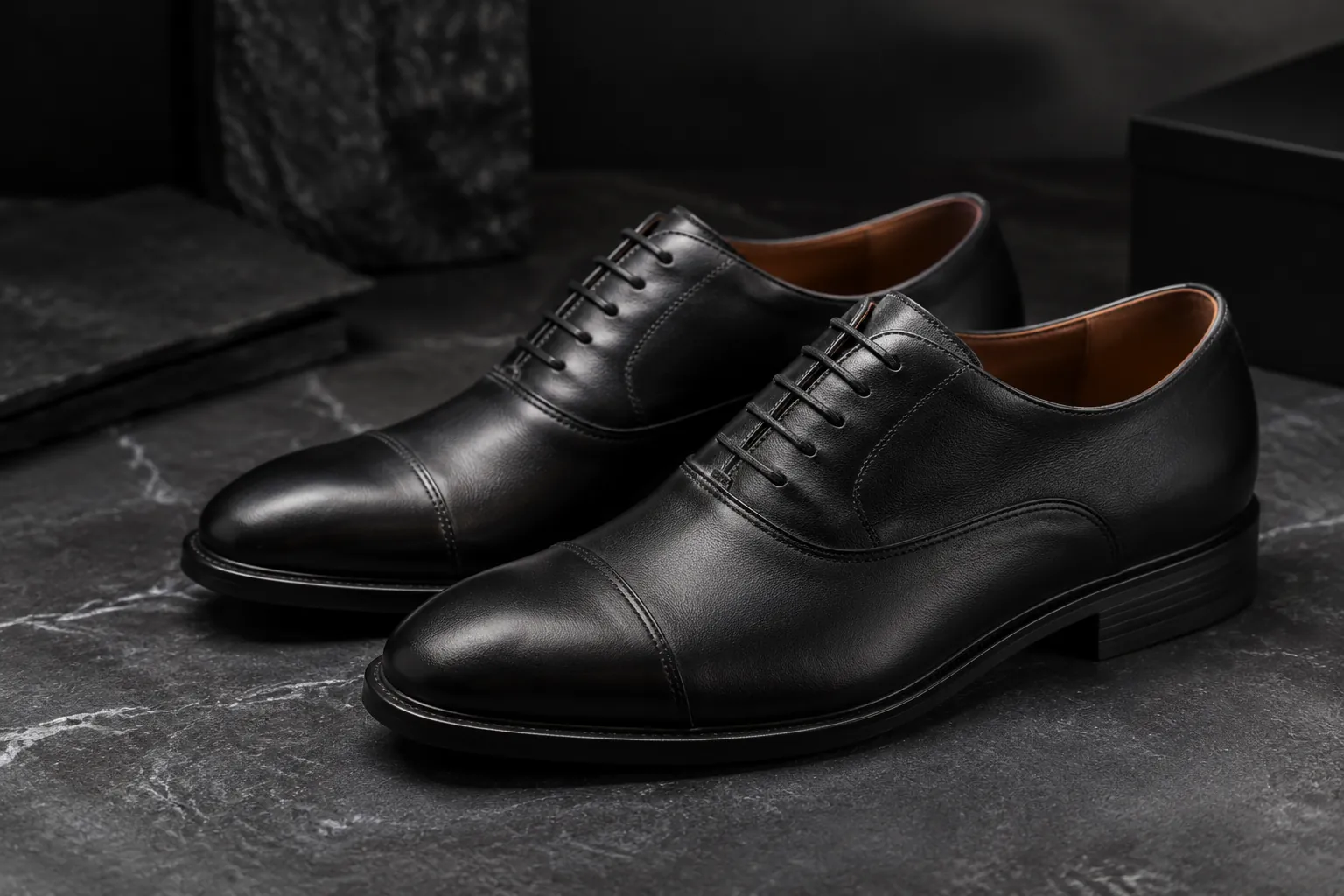
The sample looks right. Style language is set, price talk has started, and delivery pressure is rising. Leather article, color, thickness, lining, outsoles, hardware, packaging, artwork, and lot labels are still half-written. That is the failure mode custom italian leather shoes material confirmation is meant to stop: mixed or unclear materials can still enter production, and the approved Italian-aesthetic look becomes hard to defend.
This gate is buyer-owned and narrow. It is not a country-of-origin claim, not a lab report, and not a bulk-match guarantee. It is the documented boundary between liking the sample and allowing specific inputs onto the line.
When sample sign-off leaves materials loose
Sample sign-off often freezes silhouette and surface impression only. Teams still write soft phrases such as “Italian leather,” “same as sample,” or “close enough for bulk.” Those phrases do not name article, color, thickness band, lining, outsole type, hardware finish, packaging set, artwork version, or lot identity. Without those names, procurement cannot prove what was supposed to enter production when later pairs look off.
As an editorial recommendation for buyers: treat a mid-run article swap as a control failure even when both articles could pass a vague brief. Grain character, polish response, or temper can shift enough that facing lines and pair balance no longer read as the approved sample. The commercial conversation may still feel complete while material identity is not.
For custom Italian-aesthetic dress shoes, the aesthetic label describes design intent. Keep origin ranking out of this step. Keep marketing adjectives out of material fields. Put identity in fields a reviewer can check against physical goods.
Incoming scope before materials enter production
On the factory quality page, incoming confirmation is framed as a controlled-materials review before mixed or unclear materials enter production. The documented hard scope is leather article, color, thickness, lining, outsoles, hardware, packaging, artwork, and lot identity. That set is the ceiling for this gate. It does not, by itself, prove lab performance, certifications, or Italian hide origin. Buyers who need abrasion, colorfastness, or chemical tests should write those as separate specifications with their own methods and accept criteria.
For italian style leather shoe incoming materials, use that nine-field list as the factory-quality boundary once. The buyer record table that follows is the working tool; it is an editorial template, not a claim that any factory form is identical.
Build a buyer material record for each field
Translate each incoming field into a short buyer-side record the factory can review against. Replace “Italian leather” phrasing with article, color, and thickness identity, then attach lining, outsoles, hardware, packaging, artwork, and lot rules to the same sheet.
| Incoming field | What the buyer should freeze | What to leave explicit if still open |
|---|---|---|
| Leather article | Article name/code and surface family matching the approved sample intent | Alternate article only if substitution rules and re-approval path are written |
| Color | Color standard, swatch ID, or sample reference used at approval | Shade tolerance only if both sides agree how shade will be judged |
| Thickness | Thickness band for the upper material used in the sample decision | Component thickness exceptions called out by part, not left verbal |
| Lining | Lining material identity and color if it shows at the collar or tongue | Partial lining changes if they alter edge thickness or the approved hand feel |
| Outsoles | Sole type/material identity for the style family | Heel height or sole finish only if they change the approved walk and look |
| Hardware | Part type and finish | Hardware vendor switch only with finish match criteria |
| Packaging | Pack set included with bulk shoes | Retail-ready vs. transit pack if the channel decision is still open |
| Artwork | Logo placement version, stamp text, label layout | Seasonal artwork only if version control is named |
| Lot identity | How lots are labeled, segregated, and referenced on issues | Multi-lot consumption rules if volume requires more than one lot |
When the record is complete enough for review, “same as sample” becomes secondary language. The primary language is the field list, not a decorative material note on a quote.
Keep the commercial frame beside the material gate
Material confirmation should not float alone, and it should not be merged into one vague “factory process.” Two first-party frames stay separate and both stay visible.
On the OEM/ODM brief side, the commercial frame is stated as customer, market, style family, target price position, expected quantity, size range, delivery need, and the decisions the factory may propose.
On the contact quote path, style, market, quantity, size range, materials, branding, packaging, and delivery need are reviewed together rather than priced as isolated line items.
- Name commercial actors and market. Who the shoes are for and which market they enter shapes size run, packaging claims, and how formal the Italian-aesthetic story must stay.
- Keep style family language separate from material names. Cap-toe Oxford, plain-toe Oxford, or another dress line can stay in style language while article, color, and thickness stay in material language.
- State price position and expected quantity as frame, not as a substitute for materials. Price pressure often tempts article swaps. As an editorial recommendation, put any swap rule in writing if a swap is allowed at all.
- Record size range and delivery need with the same package. A late size-range change can force new lasting decisions; a delivery need does not authorize unreviewed material lots.
- List factory-proposal boundaries from the OEM brief fields. Say which items the factory may suggest and which items require buyer re-approval, typically identity fields and artwork version.
- Keep branding and packaging inside the same package as materials. Pack and brand fields already sit in the incoming scope; treat them with materials and delivery need, not as afterthoughts.
Buyers building a full OEM path can align this package with the commercial brief language on the OEM and ODM footwear page and the combined review language on the contact and quote page. The material gate remains the production-entry control described on the factory quality page.
Where dress-shoe appearance depends on material identity
For formal programs, style control points and material identity meet at the surface. On the dress-shoes page, a black cap-toe Oxford is presented as a disciplined formal anchor, with facing gap, toe proportion, cap placement, polish, and pair symmetry treated as control points. Those points are not full construction specifications by themselves.
As buyer guidance inferred from those style control points plus the incoming material fields, not as factory-page test outcomes: uncontrolled article, color, thickness, or polish consistency can break the approved look. Thickness and temper shifts can change how facing gap reads. Grain and firmness under lasting can change how toe proportion and cap placement read. Polish response depends on article and finish more than on photo references. Weak lot control can allow shade and grain drift that hurts pair symmetry.
None of that requires rewriting a complete Oxford tech pack here. It does require treating identity and lot control as appearance-critical inputs on custom Italian-aesthetic programs. If the program is Oxford-led, keep the style controls on the custom leather dress shoes page linked to the material record. Style language without material identity still leaves mixed materials a path into production.
What to freeze before production entry
Custom italian leather shoes production release is useful language only when the team can say which decisions stop material entry and which commercial choices stay open for factory proposal. The freeze list below restates the incoming hard scope; it does not add lab metrics or origin proof.
Freeze before materials enter production
- Leather article matching sample intent; color reference tied to approval; thickness band for the upper and any thickness-sensitive components you rely on for lasting or polish
- Lining where visible or structurally material; outsole identity for the approved style family; hardware type and finish
- Packaging set if pack is part of the released goods; artwork version and placement identity
- Custom italian leather shoe lot identity: labeling, segregation, and issue-reference rules so mixed or unclear lots are not accepted as default
May remain open if marked for factory proposal
- Target price position refinements inside a stated band, without silent article substitution
- Expected quantity updates, with a written effect on multi-lot consumption if volume changes
- Size-range extensions that do not alter the frozen material set without re-review
- Delivery-need adjustments that do not authorize unreviewed material swaps
- Factory-proposed alternates only inside decisions explicitly opened in the OEM commercial frame
This freeze / leave-open split is editorial buyer discipline built on the incoming field list and the commercial brief fields. Confirmation alone does not measure quality scores or guarantee bulk equivalence. The gate’s job is narrower: stop mixed or unclear materials from entering production under vague Italian-style language.
Inquiry topics that stay questions
Development path, sampling sequence, packing detail, and quotation structure often still need discussion after the material-and-commercial package is drafted. Those topics remain questions a buyer may ask for a specific project. They are not, from the excerpts used here, proven service packages, fixed lead times, minimums, or documented outcomes.
When you send the definition, ask which development, sampling, or quotation options may apply to the project. Keep that question open. Do not convert the invitation into a promise of free samples, fixed MOQs, or predetermined unit economics. The review language on the contact path is that the product and commercial frame are read together. Your job is to make that frame reviewable: materials plus branding, packaging, quantity, size range, market, style, and delivery need in one package.
Share the material-and-commercial definition
Convert the work above into a single review-ready definition rather than a pile of chat messages.
- Attach the approved sample reference and state that material confirmation is required before production entry.
- Fill the nine incoming fields against the factory-quality scope.
- Place the OEM commercial frame beside those fields: customer, market, style family, target price position, expected quantity, size range, delivery need, and factory-proposal boundaries.
- For formal styles, note how article and lot control protect polish and pair symmetry on a cap-toe Oxford program as buyer guidance tied to the dress-shoe control points.
- List freeze items versus items left open for proposal so substitutions cannot hide under schedule pressure.
- Share the package and ask which development, sampling, or quotation options may apply.
That is custom italian leather shoes material confirmation as a procurement control: aesthetic intent may stay Italian in design language if that is the brand story, while production entry still depends on named materials and lot identity. For the next step, send the definition through the contact page so style, market, quantity, size range, materials, branding, packaging, and delivery need can be reviewed together.
Sources and verification
- Leather Shoe Factory in China | Capability & Export QC First-party site source
- OEM Shoes & ODM Leather Footwear | Custom Shoe Manufacturer First-party site source
- Request a Quote | Leather Shoe Manufacturer First-party site source
- Custom Leather Dress Shoes Manufacturer | OEM & Private Label First-party site source
Share the current leather footwear definition and ask which development, sampling or quotation options may apply to the project.
Send your project brief