
OEM Sourcing
Custom Italian Leather Shoes Commercial Brief: Freeze Scope
Buyers chasing Italian-aesthetic custom dress shoes often leave commercial fields open. Freeze fixed decisions, name factory-proposal space, and bind material identity at incoming control so the first review does not rewrite intent.
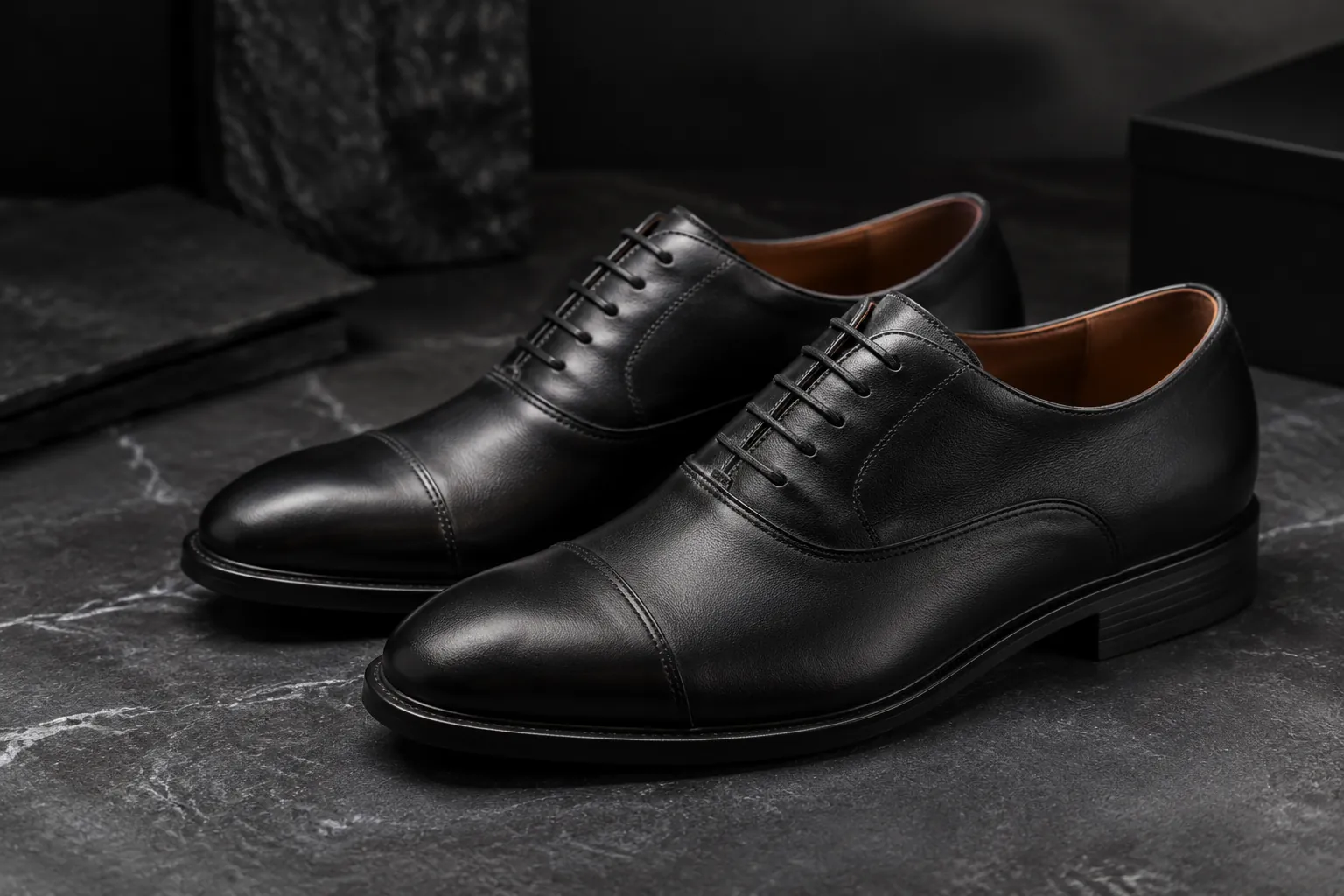
A custom italian leather shoes commercial brief usually breaks after the first sample review, not at the inquiry. Brands send Italian-aesthetic references and leather language, yet market, size range, delivery need, and factory-proposal space stay soft. Quantity and price position remain provisional, so the first joint product-and-commercial reading expands the program instead of confirming it.
This article treats the brief as a hard scope boundary for OEM and private-label dress programs with an Italian aesthetic. It is not an origin debate. Origin claims and stock Italian leather sit outside the evidence used here. The work is procurement discipline: freeze buyer decisions, label what the factory may propose, hold the style family with dress-shoe control points, and place material identity at the gates that stop mixed lots.
Where custom Italian leather shoe programs expand after the first review
Aesthetic references arrive without a frozen commercial frame. Customer, market, style family, target price position, expected quantity, size range, and delivery need stay open. The factory is not told which decisions it may propose. A responsive-looking sample or quote can still rewrite the program because nothing stopped the rewrite.
On the OEM side, the commercial frame is where those fields should be stated together, including the decisions the factory may propose. On the review side, style, market, quantity, size range, materials, branding, packaging, and delivery need are read as one package rather than priced as isolated line items. Skip that joint frame and each new email reopens a field that should already have been locked or explicitly left open.
Italian-aesthetic language sharpens the risk. A buyer may intend a narrow formal Oxford program for a defined market and size run while last shape, polish level, lining article, or packaging set still look open to the factory. Without a frozen brief, the first review becomes a second briefing, and cost follows the expansion.
Fixed buyer decisions versus decisions the factory may propose
The documented OEM commercial frame fields are customer, market, style family, target price position, expected quantity, size range, delivery need, and the decisions the factory may propose. The source does not assign those decisions for you. The split below is an editorial recommendation for the buyer: default to locking commercial fields, and open factory-proposal space only when you label it.
| Commercial field | Buyer-fixed (editorial default) | Factory-proposeable (only if labeled open) |
|---|---|---|
| Customer / end brand | Who owns the label and who wears the shoe | Not a factory decision |
| Market | Region, channel, and formality band | Not a factory decision |
| Style family | Cap-toe Oxford or another named formal family | Variant inside the locked family only if invited |
| Target price position | Band that filters construction and material choices | Cost options only inside the stated band |
| Expected quantity | Planning volume for the program phase | Phase splits only if quantity is marked open |
| Size range | Run and grading assumptions for sampling and cost | Range extension only if labeled open |
| Delivery need | In-market or ship window that constrains path | Tradeoffs only if requested |
| Proposal space | Explicit list of what the factory may suggest | Everything not listed stays closed |
If a field is open, say so in one line. If it is closed, do not re-negotiate it in sample comments. That habit keeps a private label italian leather dress shoes brief from becoming a rolling redesign.
Style family anchors for Italian-aesthetic dress programs
Italian-look language is direction, not a style family. A formal program needs a named anchor and control points that hold appearance across pairs.
For a black cap-toe dress shoe treated as the disciplined core of a formal line, the documented control points are facing gap, toe proportion, cap placement, polish, and pair symmetry. Those points keep “Italian aesthetic” from turning into an unbounded mood board after the first review.
- Name the style family in the brief (for example, cap-toe Oxford as the formal anchor), not only a lifestyle photo set.
- State facing gap, toe proportion, and cap placement as measurable or side-by-side visual limits for the sample.
- Define polish level and pair symmetry as acceptance points, not as after-the-fact preferences.
- Limit factory proposal space to options inside that family if you want suggestions at all.
- Keep construction systems out of the brief unless already decided; inventing paths not stated in your sources does not help the factory read your frame.
Buyers who need a deeper dress-shoe program view can start from the custom leather dress shoes context and still return to the commercial brief as the freeze layer. Style family without market, size range, and delivery need is still an incomplete OEM leather shoe commercial frame.
Material identity belongs in the brief and at incoming control
Material language that lives only in email threads will not survive production. Name the articles you intend to hold in the brief. Incoming control is where those names become gates before mixed or unclear materials enter production. The documented review covers leather article, color, thickness, lining, outsoles, hardware, packaging, artwork, and lot identity.
- Write leather article, color, and thickness into the brief as identity, not as vague “Italian look” adjectives.
- Name lining, outsoles, and hardware the same way, including any branded or specified components.
- Attach packaging and artwork expectations to the commercial frame so they are not priced later as surprises.
- Require lot identity to be confirmable before materials move into production, so a sample-approved look is not replaced by an unmarked substitute.
- Treat any unconfirmed article as an open question for assessment, not as an assumed factory stock item.
This is the link between custom leather shoes size range and delivery planning and the physical goods: size and ship windows only stay meaningful if the materials that fill those sizes are the ones you named. Factory quality practice for that gate is described under incoming material control. The buyer’s job is to put the same fields in the brief before sampling begins.
One joint product-and-commercial package for review
When the frame is ready for a quote or development reading, present product and commercial content together. Review practice for inquiries is to read style, market, quantity, size range, materials, branding, packaging, and delivery need as one package rather than as isolated line items. That is the opposite of a unit-price spreadsheet without a locked story.
- Style family and control points (facing gap, toe proportion, cap placement, polish, pair symmetry where they apply).
- Market and customer definition that explain formality and channel.
- Expected quantity and size range for the phase being assessed.
- Materials identity: leather article, color, thickness, lining, outsoles, hardware, packaging, artwork, and lot identity expectations.
- Branding and packaging that affect tooling, labels, and carton work.
- Delivery need that constrains path and phase.
- A short list of open questions and factory-proposal space, kept separate from fixed requirements.
OEM and ODM process context lives under OEM and ODM leather footwear. Use that page for workflow orientation; use your brief package for the actual freeze. Do not merge partial option lists from different pages into one imagined capability. Keep each gate in its own statement and map decisions only to the fields you actually froze.
Inquiry topics that remain questions, not assumed services
Several topics belong in the inquiry as questions for assessment. They are not converted here into documented company offerings, sampling promises, certification claims, or quantity rules, because those are not in the evidence used for this article.
Keep these labeled as questions: which decisions the factory may propose for this style family; whether a named material lot can be confirmed before production; how delivery need trades against size range or material availability; which sampling, packing, or quotation information applies to the project. A buyer may ask those points. Asking does not turn them into a pre-published service menu.
Also leave out origin theater. Calling a program “Italian-style” or “Italian aesthetic” is a design direction. It is not evidence of Italian leather stock or Italian origin. Keep the brief honest about what is fixed, what is open, and what has not been verified at incoming control.
Share the current definition when the frame is ready
When customer, market, style family, target price position, expected quantity, size range, delivery need, materials identity, branding, packaging, and proposal space sit in one package, send that definition for review. The contact path is built around reading the product and commercial frame together.
Share the frozen fields, list open questions separately, and ask which development, sampling, or quotation options may apply to the project. Use the quote and contact form when the commercial brief is stable enough that a joint reading will not immediately reopen every field. Scope drift after the first review is expensive. A frozen custom italian leather shoes commercial brief is the cheapest control you can apply before samples and cost start to move.
Sources and verification
- OEM Shoes & ODM Leather Footwear | Custom Shoe Manufacturer First-party site source
- Request a Quote | Leather Shoe Manufacturer First-party site source
- Leather Shoe Factory in China | Capability & Export QC First-party site source
- Custom Leather Dress Shoes Manufacturer | OEM & Private Label First-party site source
Share the current leather footwear definition and ask which development, sampling or quotation options may apply to the project.
Send your project brief