
Sourcing Guides
Custom Italian Leather Cap-Toe Oxford Specification
A procurement-focused guide for turning an Italian-style cap-toe Oxford idea into a reviewable product and commercial brief.
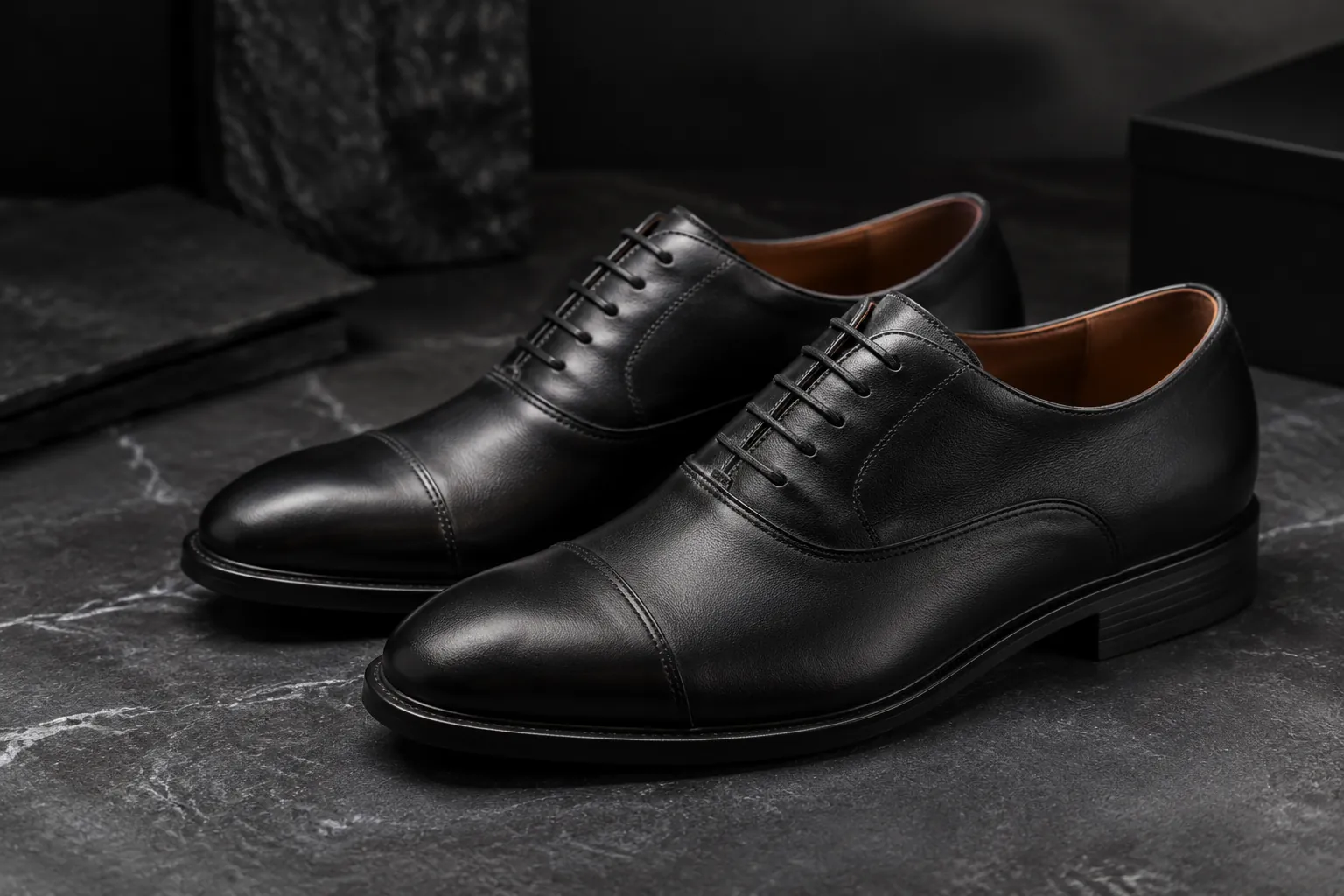
A custom italian leather cap toe oxford specification works best when it gives the factory a product definition, not only a style phrase. For a buyer, the task is to turn an Italian-style cap-toe Oxford idea into a reviewable inquiry covering the shoe, the material records, and the commercial inputs that affect the next discussion.
The phrase "Italian leather" should not carry requirements that have not been documented. It may point to a visual direction, a buyer preference, or a material-origin request, but those are different inputs. This guide treats the cap-toe Oxford as a sourcing task: define what is fixed, identify what remains open, and ask which development, sampling, or quotation options may apply to the current definition.
Start With the Review Package
Leather Shoe Manufacturer's contact page states that the product and commercial frame are read together. The cited page says style, market, quantity, size range, materials, branding, packaging, and delivery need are reviewed together rather than priced as isolated line items.
That source supports a connected inquiry structure. It does not verify Italian origin, confirm a construction method, set a minimum order quantity, or promise a sample schedule. The buyer's editorial recommendation is to send one clear package instead of a reference image followed by separate notes about leather, branding, sizes, and timing.
- Style: Identify the shoe as a cap-toe Oxford and attach references that show the intended appearance.
- Market: State the intended customer, channel, or use case in buyer language.
- Quantity: Share the expected planning quantity as context, not as a confirmed factory term.
- Size range: Provide the size scale and size run needed for review.
- Materials: Record known material inputs and label unknowns as questions.
- Branding: Include logo, sock mark, label, or artwork files when they are part of the project.
- Packaging: State box, label, carton, or packing expectations where known.
- Delivery need: Explain launch or receiving requirements if they are already known.
Freeze the Commercial Frame
The OEM and ODM footwear page describes the brief stage as the point where the buyer states the customer, market, style family, target price position, expected quantity, size range, delivery need, and the decisions the factory may propose. That evidence supports the brief inputs, not a guarantee that every open item can be solved in one direction.
For a custom leather dress shoe specification, the commercial frame should be written before small design preferences are debated. A target price position, size range, and delivery need can change how a product definition is reviewed. If one of those points is unknown, the buyer should mark it as open instead of hiding it behind words such as "premium," "classic," or "urgent."
- Customer and market
- State who the shoe is for and where it will be sold or used, such as private-label retail, office formalwear, uniform supply, or a dress shoe collection.
- Style family
- Name the product as a cap-toe Oxford. If loafers, derbies, or leather sneakers are also being sourced, keep them as separate styles.
- Target price position
- Give the intended price position if the buyer controls it. If it is not fixed, state that it remains open for review.
- Expected quantity
- Share the buyer's planning quantity as a review input. Do not present it as a factory minimum unless it has been confirmed for the project.
- Size range
- List the required scale, size run, widths, half sizes, or regional conversions as known inputs or buyer questions.
- Delivery need
- State known launch or receiving dependencies. If timing is not fixed, label it as an open commercial point.
- Decisions the factory may propose
- Ask which decisions may be proposed for the current project instead of assuming a specific construction, material source, finish level, or price result.
Define the Cap-Toe Oxford
The dress shoes page identifies the cap-toe Oxford as the disciplined anchor of a formal program. The same source names facing gap, toe proportion, cap placement, polish, and pair symmetry as control points. A buyer does not need to convert each point into a final measurement at the first inquiry stage, but each point should be visible enough for review.
| Control point | Buyer input | Review purpose |
|---|---|---|
| Facing gap | Describe the intended opening between the lacing quarters when shown on the chosen last, reference sample, or drawing. | It gives the reviewer a defined area to compare instead of judging the whole shoe from a mood image. |
| Toe proportion | State whether the toe should read elongated, moderate, or conservative, and attach references that show the intended proportion. | It turns subjective shape language into a visible comparison point. |
| Cap placement | Mark the expected cap line on a drawing, photograph, or sample note. | It separates one of the main character-setting features of a cap-toe Oxford from the general style label. |
| Polish | Describe the appearance direction, such as high-shine formal, restrained office polish, or softer retail polish. | It keeps finish discussion separate from unsupported claims about process, durability, or performance. |
| Pair symmetry | Ask how left and right appearance should be reviewed for the current development stage. | The source names symmetry as a control point; the review method should remain a project question unless documented. |
A private label cap toe Oxford inquiry can use reference photos, competitor samples, sketches, or marked-up images. The written brief should still identify which features are fixed and which remain open for review.
Separate Italian-Style From Italian-Origin
An Italian-style leather Oxford shoes manufacturer inquiry often begins with aesthetic language. Words such as sleek, formal, polished, European, premium, or classic may help communicate taste, but they do not define origin, leather article, cap placement, size scale, packaging artwork, or delivery need.
The buyer should label the language carefully. "Italian-style" can describe the desired look. "Italian-origin leather" is a sourcing requirement and should be supported by buyer-supplied documentation or asked about directly. "Cap-toe Oxford" is the style family. Commercial inputs belong in the brief, not inside the style description.
This distinction protects the inquiry from a common sourcing error: treating an aesthetic phrase as a complete specification. If origin, tannery identity, certification status, or test results matter to the buyer, those items should be requested directly as separate questions. The evidence supplied for this article does not verify those points.
Turn Leather Language Into Records
The factory quality page describes an incoming step for controlled materials before mixed or unclear materials enter production. The same excerpt lists leather article, color, thickness, lining, outsoles, hardware, packaging, artwork, and lot identity as review items in that incoming controlled-material step.
For the buyer, the editorial recommendation is to convert broad leather language into separate records. That record does not prove authenticity, compliance, origin, or performance. It supports clearer review of controlled materials and lot identity within the source's stated scope.
- Leather article: Use the supplier article name, buyer material code, or requested material reference if known. If unknown, state the appearance target as a question.
- Color: Attach a swatch, color standard, or reference image. Avoid using "Italian brown" when the real choice is shade, depth, burnish, or polish direction.
- Thickness: Include a target only if the buyer controls it. Otherwise, ask what thickness should be reviewed for the current shoe definition.
- Lining: Record lining separately from the upper leather. The upper description should not stand in for lining requirements.
- Outsoles: State the outsole request or leave it as a review question. Do not imply a construction method that is not documented in the evidence.
- Hardware: List eyelets or other hardware when they affect the look, function, or branding package.
- Packaging: Attach available box, label, carton, hangtag, or packing information when it is part of the project.
- Artwork: Provide sock stamp, label, box, or other artwork files separately from general branding notes.
- Lot identity: Keep lot identity connected to the material record when the project moves forward.
Mark Fixed Points and Questions
A useful inquiry separates decisions from questions. This prevents the brief from turning a buyer preference into a documented factory promise.
- Fixed requirement
- A buyer decision already made, such as cap-toe Oxford style family, black upper color, a defined size range, private-label sock artwork, or a target market position.
- Open review point
- A project point the buyer wants considered, such as leather article, outsole request, packaging information needed for review, or decisions the factory may propose.
- Commercial unknown
- A business input that affects review but is not final, such as expected quantity, target price position, size range detail, or delivery need.
A hypothetical buyer could write: "We are preparing a men's black cap-toe Oxford for a private-label formalwear line. The style family, cap placement direction, upper color, and sock artwork are fixed. The leather article, outsole request, packaging information, and other open decisions should be reviewed against the current target price position and delivery need." This sentence is an illustration, not a customer case, and it does not claim that any option is available.
Build the Inquiry for One Review
The finished package should let design, merchandising, and procurement read the same document. Design can check the cap-toe control points. Merchandising can review market and price position. Procurement can see which commercial inputs are fixed and which remain open.
- Project purpose: Buyer, market, selling channel, and whether the Oxford is a single style or part of a broader dress shoe program.
- Style definition: Cap-toe Oxford references covering facing gap, toe proportion, cap placement, polish, and pair symmetry.
- Commercial frame: Target price position, expected quantity, size range, and delivery need, with unknowns marked clearly.
- Material records: Leather article, color, thickness, lining, outsoles, hardware, packaging, artwork, and lot identity where known.
- Branding and packaging: Logos, artwork files, labeling requirements, and packing expectations, or questions about what information is needed for review.
- Review questions: Which development, sampling, or quotation options may apply to the current definition.
When the inquiry is ready, the buyer can share the current leather footwear definition through the contact page and ask which next-step options may apply. That is narrower, clearer, and more reviewable than asking for a quote on "custom Italian leather shoes" without the Oxford controls and commercial inputs.
Sources and Verification
The first-party sources used here are the OEM and ODM footwear page, the request a quote page, the custom leather dress shoes page, and the factory quality page.
These sources support four narrow points: the commercial brief inputs, the review of product and commercial frame together, the cap-toe Oxford control points, and the incoming controlled-material review items. They do not verify Italian origin, Italian-made production, tannery identity, certification status, test results, production capacity, sample lead times, production lead times, MOQ levels, customer outcomes, or factory visit observations. A buyer who needs any of those items should ask for them directly.
Sources and verification
- Leather Shoe Factory in China | Capability & Export QC First-party site source
- OEM Shoes & ODM Leather Footwear | Custom Shoe Manufacturer First-party site source
- Request a Quote | Leather Shoe Manufacturer First-party site source
- Custom Leather Dress Shoes Manufacturer | OEM & Private Label First-party site source
Share the current leather footwear definition and ask which development, sampling or quotation options may apply to the project.
Send your project brief